


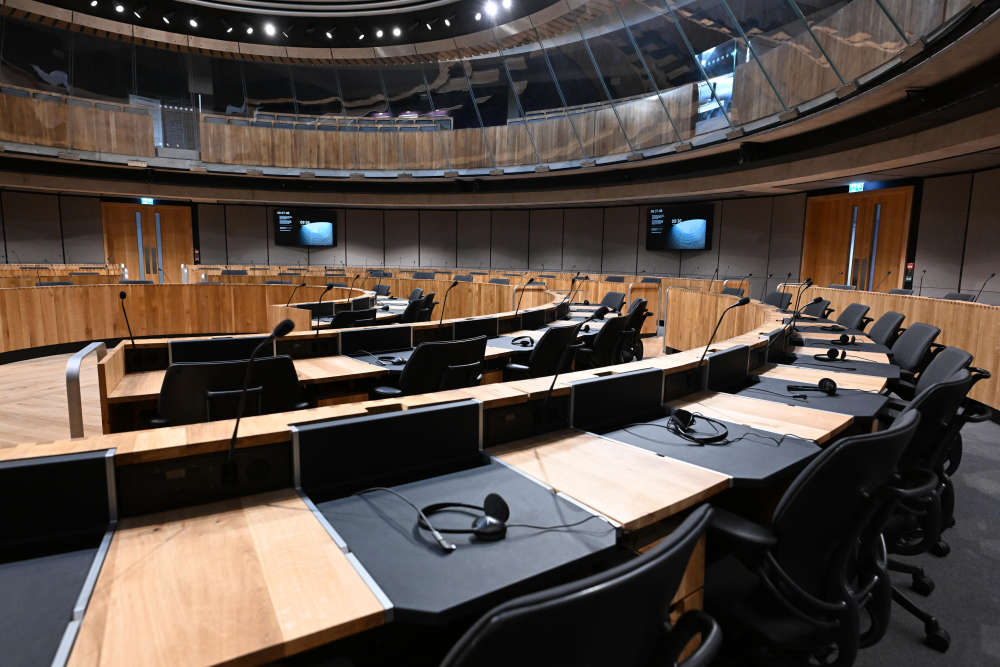
Local government funding, protection for renters, and asylum seekers were all discussed as Wales’ housing minister took questions from Senedd colleagues on Wednesday, June 17.
Siân Gwenllian, whose ministerial role includes local government, housing and planning, took her first question from Reform’s Paul Marr.
Pressing the minister on houses in multiple occupation (HMOs) and asylum seekers, Mr Marr asked Ms Gwenllian if she knew the total number of HMOs in Wales, and what proportion are occupied by current and former asylum seekers.
The Ceredigion Penfro MS spoke of meeting a 70-year-old veteran in his constituency who had spent several years living in an abandoned camper van because he was unable to secure accommodation.
Mr Marr called on Ms Gwenllian to provide “assurances” that Welsh people facing homelessness will not be “treated less favourably” in the allocation of housing or housing support than those who have been granted asylum status.
Warning the Reform MS to avoid creating divisions by “trying to point the finger at one specific group in our society”, Ms Gwenllian confirmed that 14,954 homes in Wales were HMOs as of March 31, 2025.
She added that data is not collected on residents, and as such there is no data on what percentage are occupied by asylum seekers.
“Our ambition is that everyone in Wales should have a quality home, for an affordable price and in the area that is right for them, including veterans, and including refugees too”, she said.
Ms Gwenllian referred to the First Minister’s statement on immigration and housing on Tuesday June 16, adding that “it's not immigration that is causing the housing crisis, [and] it's not asylum seekers that are causing the housing crisis.”
Fellow Reform MS Steven Rodaway also quizzed the minister on the housing shortage and asylum seekers.
Mr Rodaway asked Ms Gwenllian about the “housing demand arising from the Nation of Sanctuary programme”.
Responding, she clarified accommodation for asylum seekers is not a devolved matter, noting that it is the UK Government making those decisions.
Ms Gwenllian also stressed that social housing is not available to asylum seekers who are awaiting decisions.
She also shared the figure for the number of asylum seekers in Wales, as collected by the Home Office, noting that it is around 3,400 people.
Responding to Mr Rodaway, Ms Gwenllian said: “These are people who are fleeing atrocities and war, things that we in this chamber can only imagine in terms of the kinds of lives and the kinds of trauma that these people have experienced and are fleeing.
“So, please don't try and create divisions by discussing housing problems in the same breath as asylum seekers.
“The housing crisis has nothing to do with asylum seekers. I hope that that message is being heard by those who need to hear that message.
“The housing crisis in Wales has nothing to do with asylum seekers, it has nothing to do with refugees.”
“Extremely challenging period”
Labour’s spokesperson for local government, Mike Hedges, told the Siambr the Welsh Local Government Association (WLGA) estimated £1.6 billion of additional funding would be needed to meet budget pressures for local authorities over the next three years.
Mr Hedges added that the auditor general for Wales had said some councils in Wales were at the very edge of financial stability.
He said: “Education and social services account for the majority of local government spending. The WLGA estimates schools and social services alone make up around 60% of financial pressures this year.
“Local authorities have a statutory duty to provide these services and, with ever-increasing demand in these areas, there's little flexibility in other budgets.”
Mr Hedges questioned if Ms Gwenllian would argue for the supplementary budget to have additional money included for local government.
Describing the current financial situation as an “extremely challenging period”, Ms Gwenllian said her government understands the pressures of schools and local authorities, including the pressures on families and supporting ALN learners.
She said: “The education system and the budgetary arrangements aren't the same in Wales as they are in England, of course, and it's clear that there are significant financial pressures in local education authorities in this country as well as in England - and I know that they've had to make very difficult decisions to manage this situation.
“We must now progress in working with our partners to develop a long-term, clear transformation plan for ALN - one that is specific, clear and timely - to ensure that the sector can support the needs of learners as well as being operationally sustainable.”
Peter Fox, Conservative spokesperson for finance, local government, and communities, called on Ms Gwenllian to clarify if the government will be looking to restructure local authorities, noting a manifesto pledge to keep the structures of government in Wales, including town and community councils, under “continuous review”.
Mr Fox said this has caused “quite a lot of confusion and concern” amongst local authorities.
In response, Ms Gwenllian confirmed restructuring local government is “not a priority for this government”.
However, she added: “There are a number of things that we could be working on collaboratively with local government to reduce bureaucracy and processes and focus on delivery.
“That's where the partnership agreement that the Welsh Government has with local government is extremely valuable, so that we can discuss jointly our priorities and look to the future.”
“Deteriorating”
Plaid Cymru’s Leticia Gonzalez asked the minister for an update on work to make renting fairer for tenants.
Ms Gonzalez, who represents the Caerdydd Penarth constituency, said: “Rents in Wales are rising well ahead of wages, with private rents increasing by 8.7% across the country, and even higher in Cardiff, leaving many households vulnerable to debt and poverty.
“At the same time, UK Government policies, such as the Warm Homes programme, include the mandatory move towards energy performance certificate C requirements for all private rented homes by 2030.
“This will inevitably add further cost pressures on landlords, costs that tenants are already worried will simply be passed on through higher rents.
“This is compounded by the reduction in the cost cap available to landlords to carry out necessary upgrades, raising serious questions about how deliverable these standards are in practice within the Welsh private rented sector.”
Ms Gonzalez asked how the Welsh Government would work with the UK Government to seek clarity on how landlords can be expected to fund these improvements without driving up rents.
Ms Gwenllian noted the importance of improving energy efficiency of privately rented accommodation but said she recognises the concern about costs for landlords and for tenants.
Ms Gwenllian, who met with UK Government ministers to discuss the issue, said she made it clear that a number of landlords in Wales are not professional landlords, and the importance of supporting them to understand their obligations under the new standard.
Discussing fair rents, the minister described the situation as “deteriorating”.
She said: “There is a need for us to tackle this issue, and I will be bringing more information forward about how exactly we intend to look at managing rents, and we'll be looking at work in different countries around the world that have succeeded in doing this successfully.”
 Vueling withdraws winter flights to Aicante this winter
 Playground in Barry forced to close after fire damages equipment
 Campaigners Take Fight for Fairer Pathways in Welsh Women’s Football to Parliament
 Vale Councillor Gwyn John Launches His First Novel at Llantwit Major Book Signing
 Pink poppy display commences with celebration of life
 Former Barry office block converted into new homes for people at risk of homelessness
 Welsh Government publishes independent report on Level 4 intervention at Cardiff and Vale UHB
 Three CoastSnap stations set to be installed along the Glamorgan Heritage Coast
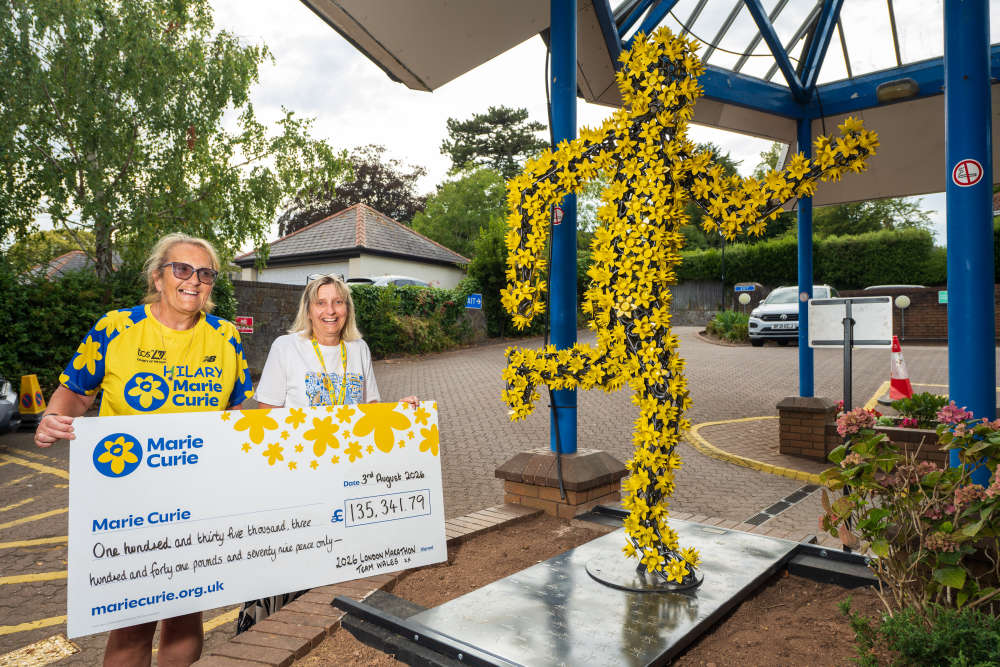 Daffodil Runner statue installed at Marie Curie Hospice in Penarth
 Woman Dies After Incident in Leckwith as Police Investigation Continues
 Vale entrepreneur wins national Innovate UK award for sustainable construction technology
 Cardiff Airport retains top accessibility rating as regulator reports record demand for assistance
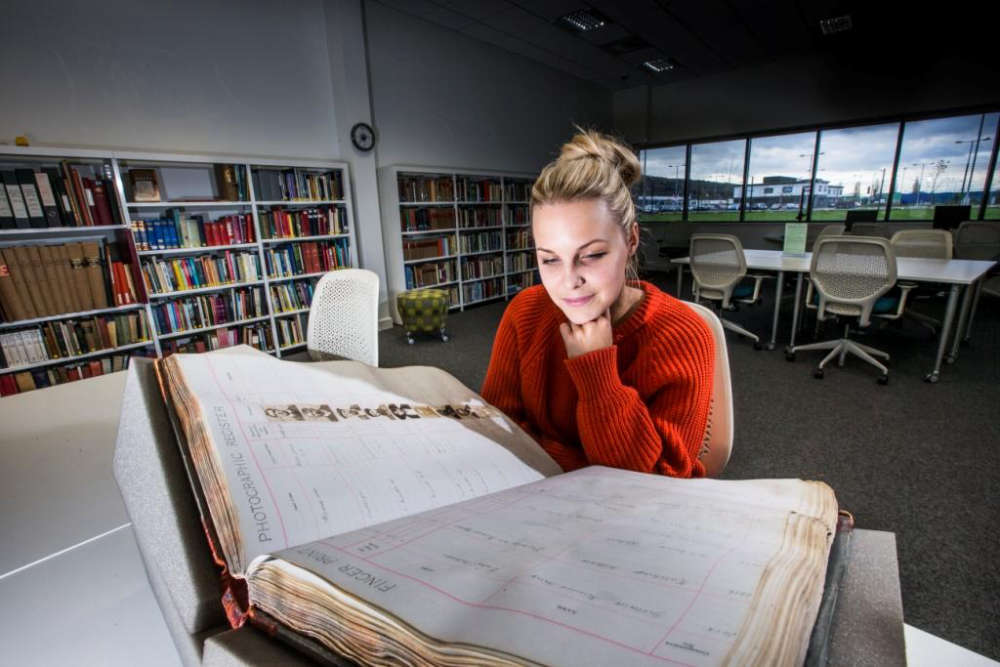 Open Doors event to showcase hidden world of Glamorgan Archives
 New details have emerged of a new tree-lined public square that will replace a traffic dominated junction
 Dyffryn Gardens’ Edwardian rose garden blooms again after decade-long restoration
 Barry’s Own Daniel White to Walk 190 Miles Back to Where His Round Table Story Began
 1,300 people attend Flying Start Family Fun Day
 Dispersal order put in place to tackle anti-social behaviour
 Interim Chief Executive Appointed at Cardiff and Vale University Health Board
 Cardiff Theatre Marks 50 Years of Service for Long‑Standing Staff Member