


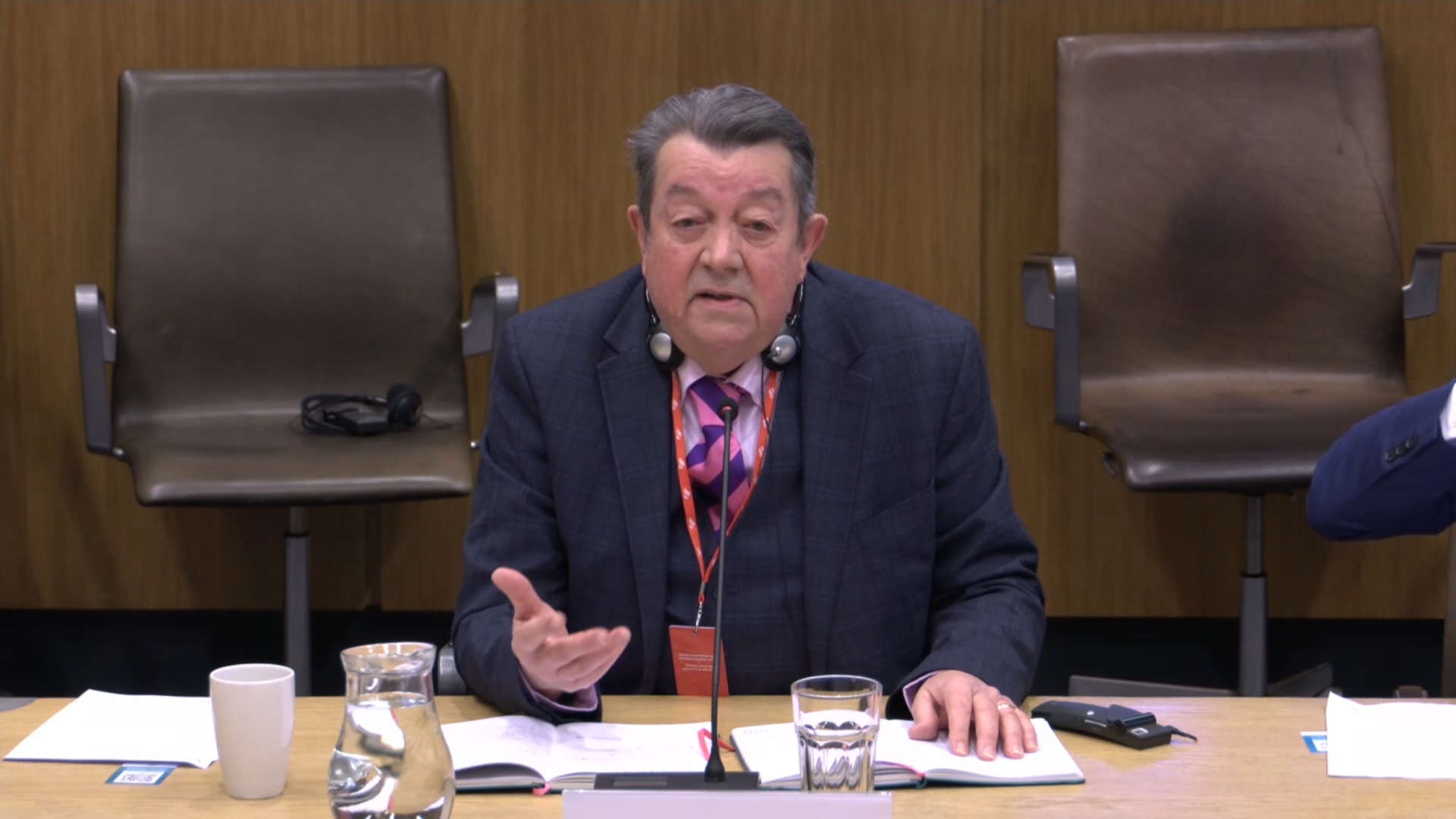
Money raised by a proposed visitor levy could be used to plug gaps in cash-strapped public services rather than support tourism as intended, the industry warned.
David Chapman, executive director at UK Hospitality Cymru, said the initial goal of the reforms – ringfencing funding to improve the visitor experience – has been eroded.
He told the Senedd finance committee: "We have within the proposed legislation, four items of potential spending that are actually removed quite considerably from that original ethos."
"I've lived all my life in Wales, we rely on public services, my family rely on public services, we use the health service – we're all in favour of extra money going into that."
"But the intention of this originally was to try to assist the industry."
'700 job losses'
Mr Chapman argued the visitor levy bill is not watertight enough to prevent the revenue raised being used to plug gaps in other areas such as health and education.
As drafted, the bill says proceeds must be used to: mitigate the impact of visitors; promote the Welsh language; support tourism; or improve local infrastructure and services.
Mr Chapman said: "If you are of a mind to fill gaps in budgets and to replace and displace existing spending then those four qualifying areas would allow you to do that."
Rowland Rees-Evans, chair of the Wales Tourism Alliance, raised concerns about rushing "headlong" into a levy, warning it could cost the economy £40m and lead to 700 job losses.
But he welcomed mandatory registration of visitor accommodation providers under the bill.
'We're not Venice'
Roy Church, co-chair of the Welsh Association of Visitor Attractions, described the bill as a "blunt instrument", added that it is based on "hopelessly out-of-date" data from 2019.
He told the meeting on Wednesday: "The Welsh visitor economy is very different from what's been looked at in the sessions before this committee."
"We're not Barcelona, we're not Venice, we're not an international destination – our visitors come, 60% nearly, from Wales and the rest mostly from the UK."
Mr Church, director of Tourism Swansea Bay, said: "It feels a bit like shooting yourself in the foot when you tax a local person to go to take their holiday break in their own country."
"The significance in our sector is the margins at which we work, we work generally with lower-income families ... and this tax hits quite hard at their spending ability."
'Most taxed'
He was in favour of under-18s not having to pay the levy, as in France and Germany, arguing scouts and educational groups, for example, should be exempt.
Labour's Rhianon Passmore asked about comparative taxes across Europe and the proposed rates in Wales, £1.25 a night or 75p for hostels and camp sites.
Mr Chapman replied: "We have 17 different taxes which apply to our businesses. We are probably, in fact I'm sure, we are the most taxed sector of any sector."
"We pay three times more than the relevant business rates that we should be paying."
Mr Chapman told the committee it would cost an extra £63 a week, including VAT, for a family of six which could make a holiday unaffordable.
'Awful'
Mr Rees-Evans asked: "Do we have to have VAT on tax? I've never heard of VAT on tax before. It sounds awful because tax is tax."
Calling for a uniform rate across Wales, he said if one council went to £3 a night then the £63 for a family of six would leap to £126.
The witnesses welcomed a suggestion that the levy could be time-limited, for example to five days, to encourage people to stay longer.
Labour's Mike Hedges said a three-night stay for a family of four at Bluestone resort in Pembrokeshire would cost £1,065, questioning the material effect of a £1.25 levy.
Mr Rees-Evans replied: "Price has an impact, anything that puts the price up."
'Suffering'
Zoë Hawkins, chief executive of Mid Wales Tourism, raised concerns about Wales gaining a damaging reputation as an expensive holiday destination.
She questioned comparisons to Catalunya, warning of a 10% fall in tourists to Wales.
Ms Hawkins said: "It's twice the population of Wales, it's got 18 million international visitors compared to our 800,000...we need more visitors into Wales, not less."
Pointing to a 23% fall in visitors to Wales in the past year, Emma Thornton, chief executive of Visit Pembrokeshire, questioned the timing and called for a level-playing field across the UK.
Jim Jones, chief executive of North Wales Tourism, said "Since Covid, it's gone from bad to worse. We have...over 1,000 members and they are telling us that they are suffering."
 Post Office Seeks New Operator in Dinas Powys as Village Faces Loss of Its Last Branch
 Gardening team praised after helping police clear fallen tree near St Brides Major
 Specsavers calls on children in Barry to design Wales Deaf Rugby World Cup shirts
 Whitmore High Named One of UK’s Best Workplaces for Development
 Steel Signing Marks Major Milestone in St Richard Gwyn School Redevelopment
 Two Rescues in Record Heat as Volunteer Teams Respond to Afternoon Emergencies
 Police find evidence of a large-scale cannabis cultivation at Riverside Place property fire
 Network Rail confirm closure of Brookside level crossing in Dinas Powys
 Police given powers to ask people to leave Comeston Lakes Country Park
 Planned children’s role play centre could be given the go-ahead by Vale Council
 Marie Curie Garden Fayre deemed huge success
 Council seeks views on Future of Colcot Sports Centre and Buttrills Playing Fields
 First Minister quizzed on further devolution, budget decisions, and misinformation in FMQs
 Extreme heat leads to changes to services and closures
 Severe Heat Warning Set to Disrupt Rail Travel Across South Wales This Week
 Communities asked to support older people across Wales during severe heat warning
 Caribbean Community Wales Brings Wales‑Wide Launch to Barry This Weekend
 Community Award winner calls for sanitary bins in men’s toilets after living with prostate‑cancer‑related incontinence
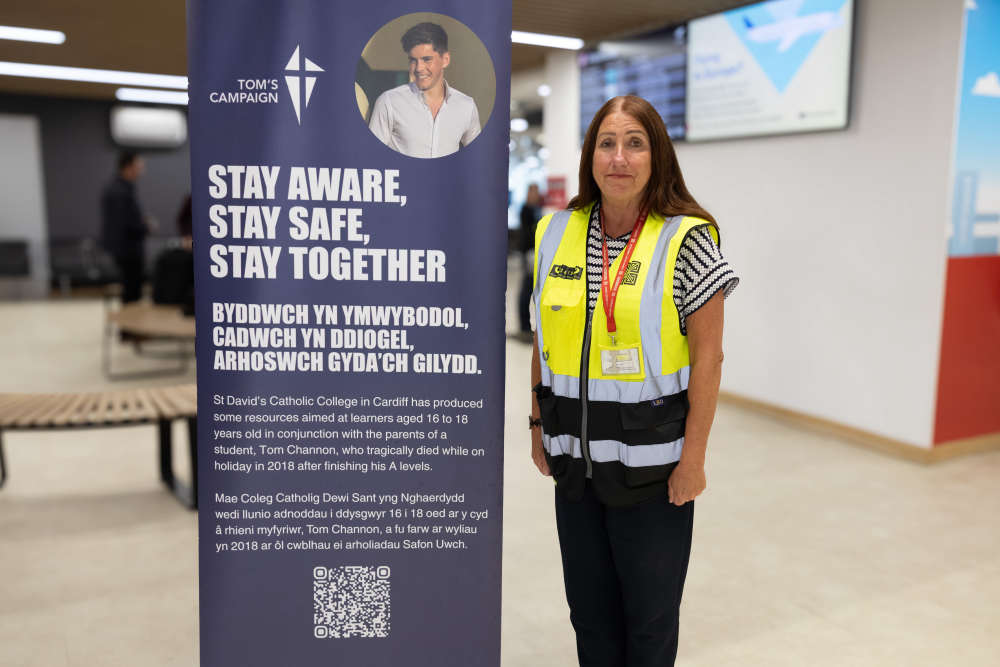 Cardiff Airport Backs Holiday Safety Campaign Honouring Rhoose Teenager Tom Channon